
Historical fiction is one of the most rewarding genres a novelist can write — and one of the most technically demanding. Learning how to write historical fiction means mastering a dual craft: the rigorous research habits of a historian and the storytelling instincts of a novelist, held in constant, productive tension. Get the balance right, and you create the kind of immersive, emotionally resonant novel that readers lose themselves in for days. Get it wrong, and you end up with either a dry textbook dressed in costume or an anachronistic fantasy that breaks trust on every page.
This guide is for indie fiction authors who are serious about the craft. Whether you're writing your first historical novel or your fifth, the principles here will help you build a world that feels authentic, tell a story that feels urgent, and give your characters lives that feel fully human — not merely period-appropriate.
Understanding What Historical Fiction Actually Demands
Before we talk about research methods or prose techniques, it's worth getting clear on what the genre is actually asking of you. Historical fiction is not history. It is not a dramatized Wikipedia article. It is a story — with all the emotional architecture that implies — which happens to be set in a specific, verifiable past.
This distinction matters because it clarifies your primary obligation. Your first duty is to your reader's experience, not to the historical record. When those two things conflict — and they will — you need a principled way to decide which gives way. We'll come back to that. But understanding that fiction's laws take precedence over history's facts is the foundational insight that separates writers who produce living novels from those who produce illustrated lectures.
That said, accuracy still matters enormously — not as an end in itself, but because readers notice when it's missing. A character in 1850s London who says "that's so random" doesn't just break immersion. It signals carelessness. It tells the reader that you haven't done the work, and once that trust is broken, it's very hard to rebuild. The goal isn't perfection. The goal is a world coherent enough that readers stop thinking about the seams.
The Contract Between You and Your Reader
Every genre makes an implicit contract with its audience. In historical fiction, that contract includes a promise: I have done the work to make this world real. Readers of the genre are often enthusiastic amateur historians themselves. They bring knowledge, expectations, and a particular pleasure in recognizing authentic detail. Your accuracy signals respect for that knowledge — and earns you enormous goodwill when the story demands you to fictionalize.
Hilary Mantel talked about this contract explicitly. In her Wolf Hall trilogy, she made bold structural choices — using present tense, referring to Thomas Cromwell simply as "he" — that were formally unconventional. Readers accepted those choices because the historical fabric was so dense and trustworthy. She'd earned her liberties through meticulous craft.
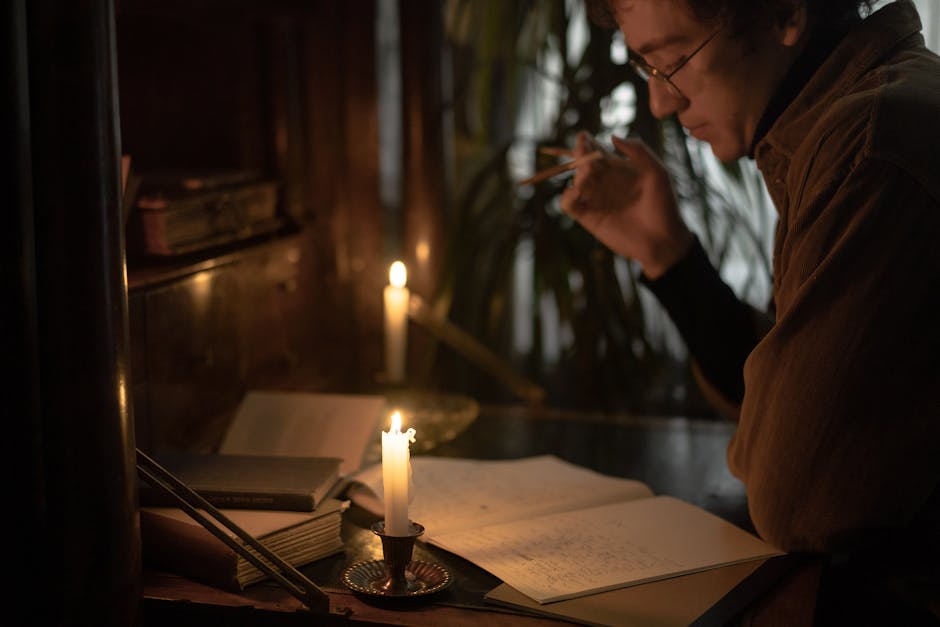
How to Write Historical Fiction: Building Your Research Foundation
Research is not something you finish before you start writing. It is a living, ongoing process that runs parallel to drafting. The writers who treat research as a discrete phase — six months in the library, then writing — tend to produce work that feels like it was written from the outside looking in. The writers who research and write simultaneously develop an intimate, embodied understanding of their period that shows in every line.
Primary vs. Secondary Sources — and Why Both Matter
Secondary sources — biographies, academic histories, popular nonfiction — give you the shape of an era. They tell you what happened, why it mattered, and how historians have interpreted it. They're your orientation. Start there.
But primary sources are where the texture lives. Diaries, letters, court records, newspapers, recipe books, ship manifests, trade catalogues — these are the sources that give you the felt quality of a period, the way people actually spoke and thought and worried. A diary entry from a Victorian servant girl will teach you more about how to write her interiority than any biography of the period.
Seek out the mundane. History books cover battles and movements and famous men. Your novel also needs to know what people ate for breakfast, how much a loaf of bread cost, and what a street smelled like in summer. These details are what make a fictional world feel inhabited rather than constructed.
When researching, keep a dedicated "texture file" separate from your plot notes. Paste in sensory details, unusual vocabulary, prices, food descriptions, and social customs as you find them. You won't use most of it — but having it available means your subconscious is constantly drawing on real period atmosphere as you write.
Knowing When to Stop Researching
Research can become a form of productive procrastination. At some point — usually when you find yourself knowing more than you'll ever need about, say, the exact rigging configuration of an 1840s clipper ship — you need to close the books and write. A useful heuristic: when your research starts answering questions you haven't yet asked in your manuscript, you have enough to begin. You can always go back.
If you're working across multiple timelines or plotlines with complex world-building demands, tools like story codex for genre fiction can help you organize your research alongside your story structure, keeping period details, character notes, and plot threads accessible in one place rather than scattered across a dozen browser tabs.
Creating Authentic Characters Who Feel Fully Human
This is where many historical novels stumble. Writers spend so much energy on period accuracy that they forget to make their characters people. Developing fully realized historical characters means holding two things in tension simultaneously: these people are shaped by their time, and they are also universal human beings driven by desire, fear, grief, and love.
Avoiding the Dual Trap of Modernization and Fossilization
The first trap is anachronism of psychology. This is when your 17th-century heroine thinks and speaks like a 21st-century woman who has accidentally wandered into a corset. She questions gender norms in the language of contemporary feminism, expresses emotions with modern directness, and holds values that would have been incomprehensible to her contemporaries. This is the modernization trap, and it's surprisingly easy to fall into because we naturally write from inside our own worldview.
The second trap is equally damaging: fossilization. This is when your character becomes so thoroughly "of their time" that they feel like a museum exhibit — a vehicle for period detail rather than a living consciousness. They exist to react to historical events, speak in archaic formality, and illustrate social structures. We never feel them from the inside.
The solution is to think in terms of universals expressed through period-specific forms. Your 17th-century heroine doesn't think about gender oppression the way a modern woman would — but she might burn with rage at being overlooked, ache for autonomy she can't name, feel the precise grief of a door being closed. The emotion is universal. The form it takes — the way she suppresses it, the language she uses privately, the actions available to her — is historically specific.
Before (fossilized): Margaret smoothed her skirts and curtsied to Lord Ashfield, as was proper for a woman of her station in the year of Our Lord 1653. She knew her place, as all women did, and spoke only when spoken to, her eyes downcast in the manner befitting her sex.
After (human and specific): Margaret kept her eyes on the floor through the curtsy. Lord Ashfield's boots were new — Italian leather, she thought, ridiculously expensive — and she fixed her gaze on the toes of them so he wouldn't see what was in her face. She had three sentences ready. Three careful, harmless sentences, because three was the most she could spend without using the one she actually wanted to say.
Notice how the second passage is grounded in specific period detail (the curtsy, the social constraint) but centers the character's inner life — her perception, her strategy, her suppressed desire. That's the balance you're aiming for.
Voice and Dialogue in Historical Settings
Dialogue is one of the trickiest elements in writing historical fiction. Authentic period speech is often impenetrable to modern readers. Fully modernized dialogue breaks immersion. The craft solution — used by virtually every successful historical novelist — is to suggest period speech rather than replicate it.
This means absorbing the rhythm, formality, and vocabulary of your period so thoroughly that it inflects your characters' speech without requiring you to use archaic constructions that slow reading. Hilary Mantel did this brilliantly in Wolf Hall. Patrick O'Brian did it with extraordinary specificity in the Aubrey-Maturin series. In both cases, the dialogue feels period-authentic without being a linguistic obstacle course.
A practical rule: avoid obviously modern slang and idiom. Don't stress-test every sentence against a 400-year-old lexicon. Read widely in the period's actual literature — the prose rhythms will get into your ear and do the work for you.

Weaving Research Into Prose Without Stopping the Story
This is the craft challenge that distinguishes good historical fiction from great historical fiction. Every writer who has done serious period research faces the temptation to share it all — the fascinating detail about how wool was dyed in medieval England, the exact procedure for loading a flintlock pistol, the complex social rituals of an Edwardian dinner party. The research is genuinely interesting. The impulse to include it is understandable.
But exposition dumps — even well-written ones — stop the story. They shift the reader from experiencing the world to being told about it. The moment your reader becomes aware that they're receiving information rather than living through events, the spell breaks.
The Iceberg Principle of Historical Detail
Hemingway's iceberg principle applies with particular force to historical fiction: the dignity of movement of an iceberg is due to only one-eighth of it being above water. Your research is the seven-eighths below the surface. It shapes everything — the confidence of your prose, the authentic texture of your world, the ease with which your characters move through their environment — but it doesn't all need to appear on the page.
When you do surface a period detail, let it do double duty. A detail that simultaneously establishes setting, reveals character, and advances the scene is worth ten times more than a detail that just establishes setting. The pistol your character loads should tell us something about who they are and what they're about to do — not just how flintlock mechanisms worked in 1740.
Exposition dump: The Great Fire of London began on the second of September 1666, in a bakery on Pudding Lane. It burned for four days and destroyed over 13,000 houses and 87 churches, including the original St. Paul's Cathedral. The city had been dry after a long summer, and the medieval timber-framed buildings burned easily.
Embedded in scene: From the roof of the stable, Thomas watched the smoke climbing above Pudding Lane — just smoke, for now, a thin grey column against the September stars. He'd seen worse. But the city had been dry since July, and the wind was coming from the east, and somewhere below in the darkness the timber frames were waiting like kindling. He had perhaps an hour to get his children out.
The second passage conveys most of the same factual information, but it does so through a character's perception and stakes. The reader absorbs the history while staying inside the story.
After completing a draft chapter, highlight every sentence that exists primarily to convey historical information. Then ask: can this detail be transferred to a character's perception, action, or dialogue? If the answer is yes — and it usually is — revise accordingly. The detail may survive, but the delivery mechanism will change.
Handling Historical Events and Real People in Your Fiction
Many historical novels intersect with documented events or feature real historical figures as characters. This introduces specific craft and ethical considerations that are worth addressing directly.
Fictionalizing Real People
When real historical figures appear in your novel — even minor ones — you take on a responsibility. You are, in effect, putting words in the mouths and thoughts in the heads of people who actually lived. The standard practice is to stay as close to documented record as possible for anything verifiable, and to flag clearly — usually in an author's note — where you have invented or speculated.
Readers appreciate this transparency. An author's note that says "I have invented Thomas Cromwell's dialogue, but his actions in this novel follow the historical record as closely as I could make them" is not an admission of failure. It's an invitation into your research process, and it deepens the reader's appreciation of the fiction.
When to Deviate From the Historical Record
Sometimes the story demands that you change things. You might compress a timeline, invent a character who plausibly could have existed, or give a historical figure a motivation that isn't documented but feels psychologically true. These are legitimate fictional choices — but they require acknowledgment.
The key question is: am I changing history for a good story reason, or am I changing it because I haven't done the research? The first is craft. The second is carelessness. If you're consciously choosing to depart from the record, know why, own it in your author's note, and make the departure serve the story meaningfully.
This is also an area where AI tools for historical fiction writers are becoming genuinely useful — not as a replacement for real research, but as a quick-reference layer that can help you flag potential anachronisms or check basic period details without breaking your creative flow. Tools like ProseEngine are increasingly designed with the specific needs of genre writers in mind, including those working in historical settings.
Structure and Pacing in Historical Novels
Historical fiction often covers long periods of time and complex social landscapes. This creates particular structural challenges. How do you maintain forward momentum when your setting itself demands a certain pace? How do you balance the "story time" of your plot with the "historical time" of your setting?
The most effective historical novels tend to find a narrow focus within a larger historical canvas. Wolf Hall is about a particular man navigating a particular court at a particular moment — not about the entire Tudor period. Lincoln in the Bardo takes place in a single night. Beloved circles a single, catastrophic act and its aftermath. The historical context is vast and present, but the narrative focus is tight.
This narrowness of focus is what allows historical novels to have genuine dramatic tension. If you try to cover fifty years of history, you'll end up summarizing. If you cover five years with intensity and specificity, you'll create something that feels lived. Consider what your novel's actual dramatic question is — what your character wants, what stands in their way, and what the cost of failure is — and let that question determine how much historical canvas you actually need.
For writers thinking carefully about structure across different types of literary and genre fiction, it's worth understanding how historical fiction sits in relation to other forms. The writing literary fiction: what sets it apart from genre fiction discussion is relevant here, since many historical novels operate in the space between literary and genre sensibilities, and understanding those distinctions helps you make conscious craft choices rather than accidental ones.
The Author's Note: Your Most Underrated Tool
The author's note is not a formality. It is a craft opportunity. A well-written author's note does several things at once: it demonstrates your research depth (which retroactively increases the reader's trust in everything they've just read), it draws a clear line between fact and invention, and it invites the reader into a conversation about history and story that can deepen their appreciation of both.
Some of the most memorable author's notes in historical fiction — Geraldine Brooks's notes in People of the Book, Anthony Burgess's prefatory notes to various novels — are essentially essays about the process of transforming history into story. They model intellectual honesty, they show the seams deliberately, and far from breaking the spell, they enhance it.
Write your author's note as if you're having a conversation with a reader who loves history as much as you do. Be specific about what you invented, what you changed, and why. Recommend two or three books for readers who want to go deeper. This is how you build not just a reader, but a follower.
Audit one scene for the modernisation and fossilisation traps
- Open a printed or handwritten page of your draft and read through one scene, underlining any word, phrase, or emotional beat that feels distinctly contemporary — slang, psychological vocabulary, or values your character could not plausibly have absorbed from their world.
- Read the same scene again and circle any moment where your character seems frozen or puppet-like — where they are performing period-correctness rather than acting from recognisable human desire, fear, or grief.
- Count your underlines and your circles separately, then write the two numbers at the top of the page; if either total is above three, list beside each mark whether the problem is anachronism of psychology or fossilisation, so you can see at a glance which trap your instincts pull you towards.
Running the same audit across a full novel-length draft typically takes three to five focused reading sessions.
Key Takeaways
- Historical fiction's first obligation is to story, not to the historical record — but accuracy earns the reader trust that makes your fictional choices forgivable.
- Research is ongoing, not a preliminary phase. Primary sources — diaries, letters, trade documents — provide texture that secondary sources cannot.
- Avoid both anachronism of psychology (modern characters in period costume) and fossilization (characters who are vessels for period detail rather than human beings). Express universal emotions through historically specific forms.
- Use the iceberg principle: let the vast majority of your research stay below the surface, informing your prose without appearing in it. When detail surfaces, make it do double duty — revealing character and advancing action simultaneously.
- The author's note is a craft tool, not a disclaimer. Use it to demonstrate your research, acknowledge your inventions, and invite the reader into a deeper engagement with the historical world you've built.
Continuing Your Development as a Historical Fiction Writer
Writing in this genre is a long education. Every novel you write in a new period requires rebuilding your research foundation from scratch. Every historical world you create presents new problems of authenticity and invention. The writers who sustain long careers in historical fiction tend to be those who genuinely love the research process — who find the encounters with real lives from the past as nourishing as the writing itself.
Read widely in the genre, not just for pleasure but analytically. When a passage of historical detail lands well, ask yourself what made it work. When a novel loses you, diagnose whether it's an accuracy problem or a story problem. Study the craft choices of writers like Mantel, Brooks, O'Brian, and Colm Toibin with the same seriousness you'd bring to any writerly mentor.
If you find yourself stuck on structural or creative problems — not just research problems — it's worth knowing that resources have expanded considerably for indie authors. The best AI writing tools for fiction today can serve as genuine craft partners, helping you work through plot problems, check consistency, and maintain story momentum through the long middle sections of a novel that trip up even experienced writers.
The historical novel at its best does something no other genre quite does: it makes the past alive. It insists that the people who lived before us were as complicated, as driven, as capable of greatness and pettiness as we are. It closes the distance between then and now, not by making the past modern, but by making it human. That's the work. It's hard, and it's worth it.