
Writer's block is one of the most frustrating experiences an indie author can face — and if you're searching for overcoming writer's block tips that actually work, you've landed in the right place. This guide is built specifically for fiction writers who are deep in the trenches of novel writing, and every strategy here is practical, tested, and grounded in real craft principles.
Before we dive into specific strategies, it helps to understand what writer's block actually is. Most writing teachers frame it as a mystery, something that descends on you like weather. But experienced novelists tend to see it differently. Writer's block is a symptom, not a disease. It usually points toward one of three root causes: emotional resistance (fear of failure, perfectionism, imposter syndrome), structural problems in your story (a plot hole, a character who isn't working, a scene you've written yourself into), or simple friction in your writing environment and habits. Once you diagnose the cause, the solution becomes much clearer.
Understanding Why Fiction Writers Get Stuck
Indie authors face a particular kind of block that's different from what journalists or copywriters experience. When you're writing a novel, you're sustaining a creative vision across hundreds of pages and potentially years of work. The stakes feel enormous. There's no editor breathing down your neck with a deadline, no immediate paycheck, just you and the blank page and the story you promised yourself you would write.
That context matters. Many of the generic tips you'll find online, things like "just write anything" or "set a timer," can feel dismissive when you're 40,000 words into a manuscript and genuinely lost. What you need are strategies that respect the complexity of long-form fiction writing.
The Three Root Causes of Block in Novel Writing
- Fear and perfectionism: The inner critic hijacks the drafting process by demanding polished prose before a rough draft is even finished.
- Story problems: You've written yourself into a structural corner — a plot inconsistency, a motivation that doesn't hold up, a scene that refuses to move forward because something upstream is broken.
- Habit and environment friction: Your writing conditions make starting feel harder than it should be, so you procrastinate instead of drafting.
With those root causes in mind, the fifteen strategies below are organized to address each one directly.
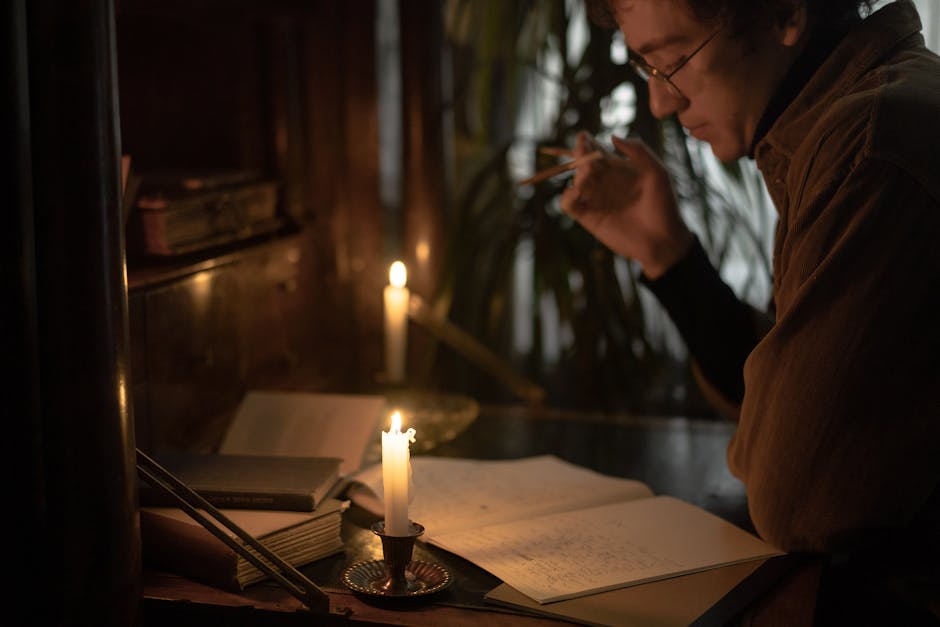
Overcoming Writer's Block Tips for Silencing the Inner Critic
The inner critic is the single most common cause of creative paralysis in fiction writers. It's the voice that reads your sentence back to you and says, that's not good enough. Here's how to quiet it long enough to get words on the page.
1. Separate Drafting from Editing — Ruthlessly
This sounds simple, but most writers don't actually do it. Drafting and editing are two neurologically different activities. Drafting requires generative, associative thinking. Editing requires critical, analytical thinking. Trying to do both at once is like trying to drive with one foot on the accelerator and one on the brake.
Practical implementation: when you sit down to draft, turn off spell check, close Grammarly, and — if you're prone to scrolling back and rewriting — try a tool that hides your previous text. Some writers tape paper over their screen. Others write in a simple text editor set to a plain white background. The goal is to remove the visual feedback loop that triggers the inner critic.
2. Write Ugly on Purpose
Give yourself explicit permission to write badly. This isn't a motivational platitude — it's a technique. Before you begin a writing session, type a single line at the top of your document:
This draft is allowed to be terrible. I am writing badly on purpose, and that is the job today.
Then watch what happens. The prose that follows is often surprisingly good — not because the permission made you better, but because it removed the tension that was stopping you from starting.
Anne Lamott called this "shitty first drafts" in her essential craft book Bird by Bird, and it remains one of the most liberating concepts in all of writing instruction. The novelist you admire most wrote terrible first drafts. The difference is they finished them.
3. Use Timed Writing Sprints
Short, focused bursts of writing with a defined endpoint are remarkably effective at bypassing the inner critic. When you know you only have to write for twenty minutes, the stakes feel lower. Your brain stops treating the session as a permanent artistic statement and starts treating it as a temporary experiment.
If you're not already using this method, reading about writing sprints: how to boost your daily word count will give you a complete framework for building sprint sessions into your daily routine. The compound effect of even small daily word counts across a novel's timeline is extraordinary.
Set your sprint timer for an odd number — 23 minutes instead of 20, or 17 instead of 15. The unusual duration feels less "official," which paradoxically lowers the psychological pressure and makes it easier to start without overthinking.
4. Start in the Middle of a Sentence
One of the most underused techniques for fighting the blank-page problem is to end each writing session mid-sentence. When you return the next day, you don't face a blank page — you have to finish a thought, and finishing a thought is infinitely easier than beginning one. Ernest Hemingway reportedly used this method, stopping work each day while he still knew what came next so that starting the following morning felt natural rather than daunting.
Strategies for Diagnosing and Solving Story Problems
Sometimes the block isn't psychological — it's structural. If you've been staring at a scene for days and nothing comes, the problem may not be fear. It may be that your story is sending you a signal that something isn't working. Learning to read that signal is a genuine craft skill.
5. Reverse-Engineer the Scene's Purpose
Every scene in a novel should do at least two of the following things: advance the plot, reveal character, establish or shift the relationship between characters, or raise the stakes. If you're stuck on a scene, ask yourself what it is supposed to do. Then ask whether it's actually doing that.
Often the reason you can't write a scene is that you don't actually need it. The scene exists because you assumed it had to be there — a transitional scene getting your character from one location to another, say — but it has no real narrative function. The fix isn't to push through. The fix is to cut the scene entirely and move directly to the next meaningful story beat.
6. Interview Your Characters
This technique feels strange the first time you try it and becomes indispensable after that. Open a blank document and write a conversation between yourself and the character who is giving you trouble. Ask them why they're not cooperating. Ask them what they want. Ask them what they're afraid of. Write their answers in their voice.
Before (stuck draft): "Elena walked into the room and looked at the table. She picked up the letter. She didn't know what to do."
After character interview: The interview revealed that Elena is terrified of confirmation — she'd rather not know the truth than face it. That insight unlocked the scene entirely: "Elena stood in the doorway for a long time before she crossed the room. The letter sat there, patient and unforgiving. She picked it up. She turned it over. She set it back down. She made herself a cup of tea she wouldn't drink, and she stood at the window and watched the street, because some things, once read, cannot be unread."
The block in that example wasn't really about the action in the scene. It was about not understanding the character's interior state deeply enough. The interview technique surfaces that interior life quickly.
7. Write the Scene You're Excited About
Conventional writing advice often suggests you must write your novel in linear order. But many successful indie authors work differently. If you're stuck on Chapter 12 but you have a burning, vivid sense of a scene in Chapter 18, write Chapter 18 today. The excitement you feel about a future scene is the story's momentum trying to move forward. Honoring that momentum often loosens the block on the scene where you're stuck.
Plotting software and manuscript tools can help you keep these out-of-sequence scenes organized. Some writers use ProseEngine to track where their drafted scenes fit in the larger story structure, especially when they're working non-linearly and need to see the manuscript's shape at a glance.
8. Change the Point of View
If a scene is stuck, try drafting it from a different character's perspective. You may not keep this version — it might simply be a diagnostic exercise — but seeing the scene through different eyes often reveals what's missing. Gillian Flynn has spoken about writing scenes from multiple viewpoints during drafting to find the one that carries the most dramatic tension. The version she kept wasn't always the one she started with.

Building Habits That Prevent Creative Blocks Before They Start
The best cure for writer's block is a writing practice so consistent that block doesn't get a foothold. This isn't about grinding through misery — it's about building environmental and habitual conditions that make writing feel easier than not writing.
9. Lower the Bar for Starting
The biggest barrier to daily writing isn't talent or time — it's the act of beginning. Make starting so easy it feels ridiculous not to do it. That might mean your only commitment is to open your manuscript document every morning, even if you write nothing. That might mean committing to 100 words, which takes six minutes. When the bar is low enough, you almost always exceed it.
If your challenge is truly one of available time rather than motivation, the article on how to manage your writing time as a part-time author offers a realistic framework for carving out writing sessions even in a packed schedule. Finding the time and finding the motivation are often the same problem, and solving one frequently solves the other.
10. Establish a Pre-Writing Ritual
Rituals signal to your brain that a particular mode of thinking is about to begin. Pavlov's dogs are the famous example, but the same conditioning works for creative work. Many novelists report that making a specific drink, listening to a particular playlist, or reading a paragraph from an admired novel before they begin creates a reliable on-ramp into the creative state.
The ritual doesn't need to be elaborate. It needs to be consistent. After a few weeks, the ritual itself becomes the trigger for creative readiness.
11. Keep a Story Bible and Let It Do the Memory Work
One underappreciated cause of block in long fiction is cognitive overload. When you're deep in a novel, your brain is holding an enormous amount of information: character histories, plot threads, world-building rules, timeline details. The mental effort of tracking all of this can crowd out the generative thinking you need for drafting.
A story bible — a living reference document where you record everything about your world, characters, and plot — offloads that cognitive burden. When your brain knows the information is safely stored somewhere, it stops burning working memory to maintain it. The result is more mental bandwidth for actual writing.
Your story bible doesn't need to be beautiful or comprehensive before you start writing. Begin with a single document that captures character names and key traits, your timeline, and any rules of your world you've established. Add to it as you draft. Even a rough story bible dramatically reduces the mental friction that leads to block.
Unconventional Strategies Worth Trying
The following strategies fall slightly outside conventional writing advice, but each has a solid track record among working novelists. If the standard advice hasn't worked for you, these are worth a serious attempt.
12. Write Longhand for One Session
The physical act of writing by hand engages different neural pathways than typing. It's slower, which can actually be an advantage: your conscious mind can't race ahead of your hand, so you stay present in the scene rather than mentally editing three sentences ahead. Many writers who are deeply stuck find that a single longhand session breaks the block, after which they return to typing without issue.
13. Narrate Your Story Aloud
Tell your story as if you're telling it to a friend over dinner. Don't write anything — just talk. You'll likely find that the version you narrate aloud is looser, more direct, and more energetic than the version you've been trying to write. That's the voice you want on the page. Record yourself if possible, then transcribe the passages that feel most alive.
14. Use AI as a Brainstorming Partner, Not a Ghostwriter
There's a meaningful distinction between using AI to write your novel for you and using it to unstick your thinking. The former is a shortcut that usually produces generic prose with none of your distinctive voice. The latter is a legitimate creative tool. If you're stuck on a plot problem, asking an AI to generate ten possible directions — not to pick for you, but to spark your own thinking — can be genuinely useful.
If you're curious about this approach, the guide on how to use AI for novel writing without losing your voice is a thoughtful resource that draws a clear line between AI as collaborator and AI as replacement. There are also AI tools to boost your writing speed that many indie authors use specifically for research and brainstorming without touching the actual prose.
15. Give Yourself a Defined Ending Point
Blocks are often sustained by the feeling that the work is infinite. If you sit down knowing you must write "until the chapter is done" and the chapter is a shapeless fog, the task feels impossible. But if you sit down knowing you'll write for thirty minutes and then stop — regardless of where you are — the session feels finite and manageable.
Constraint is creative fuel. Parkinson's Law, the principle that work expands to fill the time available, works in reverse too: when time is genuinely limited, writers often produce their best and most focused work. Experiment with harder stop times, not just start times.
Putting It All Together: Building Your Personal Anti-Block Protocol
No single strategy works for every writer or every type of block. The goal is to build a personal toolkit — a ranked list of two or three approaches you try first when you get stuck, followed by deeper diagnostic tools if those don't work.
A simple protocol might look like this: first, try a timed sprint with explicit permission to write badly. If that doesn't work after two sessions, diagnose whether the problem is emotional or structural. If emotional, use the character interview or the longhand session. If structural, reverse-engineer the scene's purpose or skip ahead to a scene you're excited about. If nothing is working after a week, step back and assess whether there's a larger story problem upstream that needs solving before you can move forward.
The writers who finish novels aren't the ones who never get blocked. They're the ones who developed a relationship with the block — who learned to see it as useful information rather than evidence of failure, and who built the tools to move through it with intention.
Diagnose what your stuck scene is actually supposed to do
- Open your manuscript to the scene where you are currently blocked and read it through once without changing anything.
- Write four headings on a scrap of paper: Advances plot / Reveals character / Shifts a relationship / Raises stakes — then place a tick under every heading the scene genuinely earns, not what you intend it to earn.
- Count your ticks: if you have fewer than two, write one sentence beneath the tally naming the single narrative function you will commit this scene to fulfilling before you draft another word of it.
Running this check on every scene in a full novel typically means working through sixty to ninety scenes — several hours of diagnostic reading spread across multiple sittings.
Key Takeaways
- Writer's block is almost always a symptom of fear, story problems, or environmental friction — diagnosing the root cause points you toward the right solution.
- Separating drafting from editing is the single most powerful habit shift available to fiction writers who struggle with perfectionism and the inner critic.
- If you're stuck on a scene, the problem is often structural rather than motivational — try reversing out of the scene, changing point of view, or asking whether the scene is actually necessary.
- Consistent low-bar habits — short sprints, pre-writing rituals, a maintained story bible — prevent many blocks from forming in the first place.
- Your personal anti-block protocol should be a ranked list of strategies matched to the type of block you most commonly experience, not a generic set of tips applied at random.
Writing a novel is one of the most demanding sustained creative acts a person can undertake. Getting stuck is not a sign that you lack talent or commitment. It's a sign that you're doing something hard. These fifteen strategies won't make the hard parts easy, but they will make them navigable — and navigation, in the end, is what finishing a novel requires.