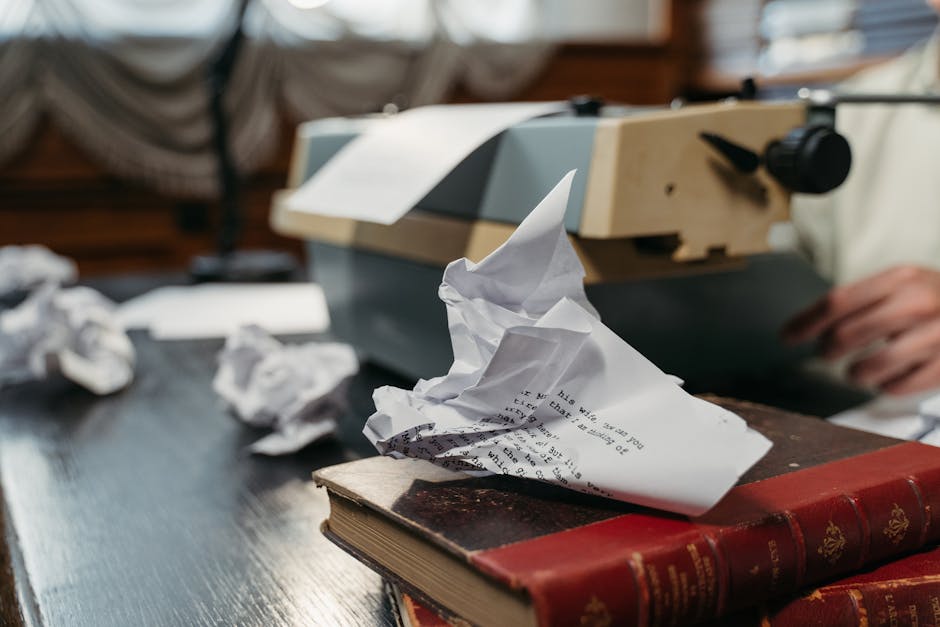
If you've spent any time in writing communities, you've almost certainly stumbled into the debate over plotting vs pantsing — two fundamentally different approaches to writing a novel, and two camps of authors who will defend their method with near-religious conviction. Understanding which approach suits your creative process could be the difference between finishing your next book and abandoning it at chapter six.
The truth is more nuanced than most writing advice suggests. Neither plotting nor pantsing is objectively superior. But one of them is almost certainly better suited to you — your brain, your creative temperament, and the kind of stories you want to tell. This guide will help you figure out which that is, show you how each method works in practice, and offer some honest advice about when to bend the rules.
What Is Plotting vs Pantsing? Definitions That Actually Make Sense
Plotters plan their novels before they write them. This can range from a loose chapter-by-chapter outline to a hyper-detailed document that maps every scene, beat, turning point, and character arc before a single word of prose is drafted. Famous plotters include J.K. Rowling, who famously sketched out Harry Potter's seven-book arc on a legal pad, and John Grisham, who produces exhaustive outlines before touching his manuscripts.
Pantsers — a term derived from "writing by the seat of your pants" — dive into a novel with little or no predetermined structure. They discover the story as they write it. Stephen King is the most cited example: in On Writing, he explicitly rejects outlines and describes his process as uncovering a story the way an archaeologist uncovers a fossil. Margaret Atwood has also described a similarly intuitive approach.
Then there's a third camp that doesn't get enough credit: plotsers, or hybrid writers. These are authors who work with a loose structural framework — enough to orient themselves — but leave substantial room for discovery within that framework. Many working novelists, especially those with multiple books under their belt, end up here.
Why the Debate Matters More Than You Think
For indie authors especially, this isn't just a philosophical question. The method you choose affects your production speed, your revision process, your risk of burnout, and whether your book ever gets finished at all. A pantser who forces themselves to outline in exhaustive detail may find their creativity strangled before they reach page ten. A plotter who tries to write without a map may spiral into anxiety or churn out a structurally incoherent draft that takes years to untangle.
Getting this right early can save you months — sometimes years — of wasted effort.
The Case for Plotting: Why Outliners Swear by the Method
Let's steelman the plotter's position first, because the benefits are real and substantial.
Structure Prevents the Most Common Novel Killers
The majority of unfinished novels fail not because the writer lacked talent or ideas, but because the story lost momentum. The writer didn't know where they were going. They wrote themselves into a corner. The middle sagged. A character's motivation stopped making sense. All of these are structural problems — and structural problems are exactly what plotting is designed to prevent.
When you know your ending before you begin, every scene you write can pull toward it. Cause and effect become visible. Foreshadowing becomes intentional rather than accidental. You can plant a detail in chapter two that pays off in chapter eighteen because you already know chapter eighteen exists.
Consider how this changes the experience of writing a plot twist. When you're working from an outline, a twist isn't a surprise you stumble into — it's a promise you've already made to your reader on the structural level, hiding in plain sight. If you want to write reversals that genuinely shock but feel inevitable in retrospect, understanding your full story arc in advance is a massive advantage. This connects directly to the craft of how to write plot twists that shock but make perfect sense — a skill that rewards the kind of forethought plotters naturally practice.
Plotting Speeds Up First Drafts (Paradoxically)
This surprises many writers. Surely spending weeks on an outline before writing a word is slower? In practice, plotters often write faster first drafts because they never stall at a blank page wondering what comes next. The outline functions as a scaffold. You show up, check your plan, and write the scene. Decision fatigue — one of the most insidious enemies of daily word count — is dramatically reduced.
Plotters also tend to produce cleaner first drafts that require less structural revision, which saves significant time in the editing phase.
If you want to try plotting for the first time, don't start with a 40-page document. Try a simple "story spine": opening situation, inciting incident, rising complications, midpoint shift, darkest moment, climax, resolution. Just seven to ten sentences. That's enough structure to keep most pantsers oriented without killing the sense of discovery.
The Midpoint and Why Plotters Nail It
One structural element that separates good novels from great ones is a strong midpoint — a scene that fundamentally changes the protagonist's situation or understanding, raising the stakes and shifting the story's direction. Plotters, by definition, know where their midpoint is. They've designed it. They can build toward it and away from it with intention.
Pantsers often struggle here. The middle of a novel — roughly the forty to sixty percent mark — is where most narratives lose energy, and it's where most readers put a book down for good. Understanding the midpoint reversal: why it's the most important scene in your novel is an argument for at least a minimal structural framework, even if you prefer to discover your story as you write.
The Case for Pantsing: Why Discovery Writers Produce Magic
Now for the pantser's defense — and it's a compelling one.
Discovery Writing Produces Genuine Surprise
There's something a plotter's outline can never fully replicate: the experience of genuine surprise. When a pantser's character does something unexpected, when a scene reveals a theme the writer didn't consciously intend, when two plot threads collide in a way that wasn't planned — that energy is often palpable on the page. Readers feel it.
Stephen King's argument is essentially this: if the writer doesn't know what's going to happen, the reader certainly won't. There's a kind of aliveness to discovery writing that can be difficult to manufacture with a predetermined plan.
Pantser Draft — Discovering Character Voice:
She opened the drawer. Inside was her mother's handwriting on a folded piece of paper. She hadn't expected that. She hadn't expected to feel her hands go cold, either, or to push the drawer closed without reading it. Maybe tomorrow. Maybe never. The drawer was just a drawer again.
Why this works: The writer discovered, in the act of writing, that this character isn't ready to face what the letter contains. That emotional truth — the drawer closing, the deferral — emerged from following the character rather than a predetermined plan. It reveals character more authentically than a plotted beat might.
Characters Lead, and the Story Follows
Many pantsers describe their characters as autonomous — entities who develop their own logic and drag the story in directions the writer didn't expect. This sounds mystical, but it has a practical basis: when you write a character consistently and authentically, their decisions start to feel inevitable rather than authorial. The character's psychology generates plot.
This is one reason pantser novels often excel at character depth. The writer has spent so long living inside their characters' heads, discovering who they are through the act of writing, that the characterization has a richness that's hard to engineer in advance.
The Cost: Revision Is Heavier
Pantsers need to be honest about the tradeoff. Discovery writing produces richer raw material — and considerably messier first drafts. A pantser's revision process often involves significant structural overhaul: cutting subplots that went nowhere, adding foreshadowing that was absent, sometimes rewriting entire sections from scratch because the ending the writer discovered is incompatible with the beginning they wrote six months ago.
This is not a reason to abandon pantsing. It's a reason to budget for revision time and to embrace it as part of your process rather than a sign of failure.
Before Revision (Pantser First Draft):
Marcus arrived at the warehouse and found the door open. He went inside. The crates were all empty. He checked his phone — no signal. He decided to leave and come back later with help.
After Revision (Once the Writer Knows the Full Story):
Marcus found the warehouse door hanging open at an angle that looked wrong — not forced, but tired, as if it had been left this way before and no one had bothered to fix it. Inside, every crate stood empty. He'd expected that, almost. What he hadn't expected was the child's shoe sitting on top of the last one, laces still tied. He didn't check his phone. He already knew there was no one to call.
What changed: Once the writer knew the full story — that a child was involved and that Marcus would face this alone — the scene could be revised to carry that weight. The detail of the shoe became a piece of foreshadowing that didn't exist in the discovery draft. This is pantser revision at its best.
If you're a pantser struggling with structural chaos in your drafts, try a "reverse outline" after your first draft is complete. Go through your manuscript and summarize each scene in one sentence. Lay those summaries out and look at the shape of your story. You'll immediately see where the pacing drags, where plot threads drop off, and where your actual midpoint lands versus where it should. This technique lets you preserve the discovery while engineering a stronger structure in revision.
How to Know Which Method Is Right for You
Here's the honest answer: most writers already know, intuitively, which method suits them. The question is whether they've given themselves permission to commit to it — or whether they've been told by writing advice (often well-meaning but generic) that they should be doing it differently.
Signs You're a Natural Plotter
- You feel anxious when you don't know where your story is going
- You enjoy the outlining process and find it energizing rather than constraining
- You frequently hit the middle of a novel and stall without a plan
- You prefer to write fast, clean drafts and minimize structural revision
- You write in genres with tight structural conventions — thrillers, mysteries, romance — where reader expectations around pacing are high
Signs You're a Natural Pantser
- Outlining feels like it kills your motivation to write the story
- Your best scenes emerge unexpectedly, surprising even you
- You write character-driven literary fiction or stories where atmosphere and voice matter as much as plot
- You're comfortable with heavy revision and view it as part of the creative process
- Knowing the ending in advance makes the writing feel pointless to you
Signs You Should Try the Hybrid Approach
- You've tried both methods and found the extremes of each frustrating
- You want some structure but resist detailed scene-by-scene outlines
- You're a plotter whose outlined stories feel mechanical and lifeless on the page
- You're a pantser whose novels regularly collapse structurally in the middle
The hybrid approach — sometimes called the "headlights method" — involves knowing roughly where you're going (your ending and major turning points) while leaving the scene-level discovery intact. You can see far enough ahead to drive safely without mapping every turn in advance.
Tools and Workflows That Support Both Methods
Whether you're a plotter or a pantser, your tools should serve your process rather than impose a workflow that doesn't fit. This is worth thinking carefully about, because the wrong tool can reinforce bad habits.
Plotters often benefit from dedicated novel-planning software that lets them visualize structure, manage timelines, and track character arcs across a manuscript. If you're weighing your options, a comparison like ProseEngine vs Scrivener can help you find the right environment for your planning style — particularly if you want something built specifically for fiction writers rather than a general-purpose writing tool.
Pantsers, meanwhile, often do best with tools that stay out of their way during the drafting phase but provide powerful organization features when revision time arrives. The ability to reorganize scenes, add notes, and track plot threads retroactively is particularly useful. ProseEngine's manuscript organization features are designed with exactly this kind of fluid, revision-heavy workflow in mind.
For writers curious about speeding up any stage of the process, exploring the best AI writing tools currently available is worth your time — not to replace your creative judgment, but to handle the parts of writing that drain your energy without adding to your artistic vision.
The Bigger Picture: Method Is Just One Part of the Craft
It's tempting to treat the plotting vs pantsing question as if solving it solves everything. It doesn't — but it's genuinely important. Method affects momentum, and momentum affects completion, and completion is the only thing that actually produces a published book.
Plenty of brilliant outlines never become novels. Plenty of pantser first drafts never survive revision. The method that works is the method that gets you to a finished, polished manuscript — and that looks different for every writer.
As you develop your process, think about how it integrates with the other craft elements you're building: your marketing strategy, your platform, your relationship with your readers. Building an author platform before your first book is a conversation that overlaps with your writing process more than most new authors expect — because your process determines your publishing timeline, which determines when and how you engage your audience.
Give Yourself Permission to Experiment
If you've been pantsing for years and your novels keep collapsing, spend three months as a devoted plotter. Write the most detailed outline you can stomach and follow it. See what happens. If you've been outlining obsessively and your books feel mechanical, take a short story or a side project and write it entirely without a plan. Pay attention to where the energy lives for you.
Most writers who've been working for five or more years have tried both methods seriously and landed somewhere specific. The experimentation period is valuable. Don't skip it because someone told you that real writers only work one way.
Diagnose your natural method using one scene you've already written
- Open any scene from your current draft and read it through once without editing.
- Write two short answers on paper: first, what you knew about this scene before you wrote it (its purpose, outcome, or beats); second, what surprised you or changed while writing it — details, turns, or character behaviour that arrived uninvited.
- Label each answer P (for planned) or D (for discovered), then count your totals — a higher P score suggests plotter tendencies, a higher D score suggests pantser tendencies, and a rough split marks you as a likely plotser.
Running the same check across every scene in a full novel-length draft takes several hours and produces a clear pattern of where your structural instincts are strong and where momentum typically dies.
Key Takeaways
- Plotting and pantsing are both legitimate methods — the right choice depends entirely on your creative temperament, not on what works for your favorite author.
- Plotters benefit from reduced decision fatigue, cleaner first drafts, and stronger structural intentionality — especially valuable in plot-driven genres and for writers who struggle to finish novels.
- Pantsers often produce richer character work and more surprising prose, but should budget for heavier structural revision and consider tools like reverse outlining to add shape after the fact.
- The hybrid approach — knowing your major structural beats while leaving scene-level discovery intact — works well for writers who find the extremes of either method frustrating or limiting.
- Your tools should serve your process: find software that matches how you actually work, whether that means robust outlining features for plotters or flexible reorganization tools for pantsers who revise heavily.
The debate over plotting vs pantsing will probably never be settled — because it shouldn't be. It's not a problem to solve. It's a creative reality to understand about yourself. Once you do, you stop fighting your own process and start using it. That's when books actually get finished.